
The Silver Work of Ella Linkin: Heritage, Craft, and Distinctive Design

Updated: Sep 14
Ella Linkin is a Navajo artist whose jewelry reflects both deep cultural roots and a highly recognizable personal style. Born in 1954 in Gallup, she is a member of the Salt People Clan and born for the Water Edge Clan—an important aspect of identity within Navajo culture.
Today, Ella Linkin lives and works in Spencer Valley, where she continues to create handcrafted jewelry rooted in tradition. Ella has four children.

Early Life and Training
Ella Linkin began her silversmithing journey at just 15 years old. She learned the craft directly from her father, Lee Wylie, continuing a long-standing Navajo tradition of passing skills down through generations.
This hands-on mentorship provided her with a strong foundation in traditional techniques, shaping both her technical ability and artistic voice from an early age.
Style and Craftsmanship
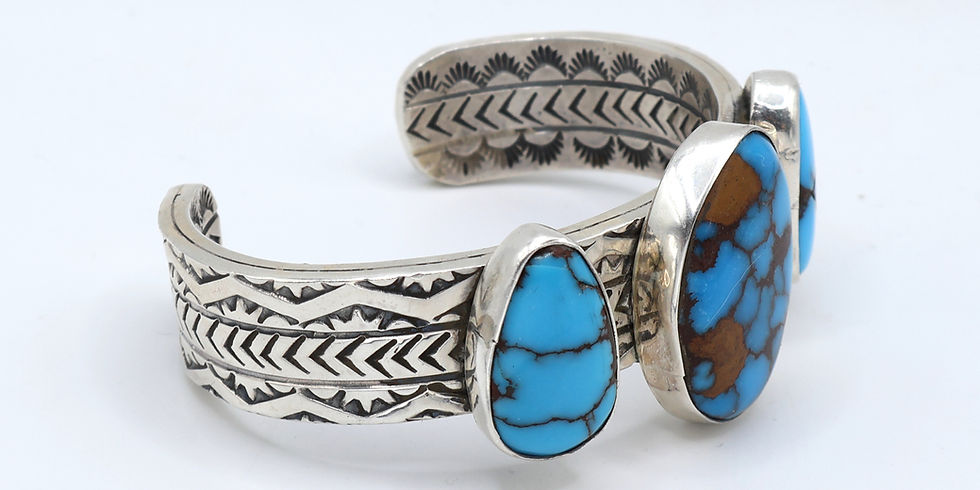
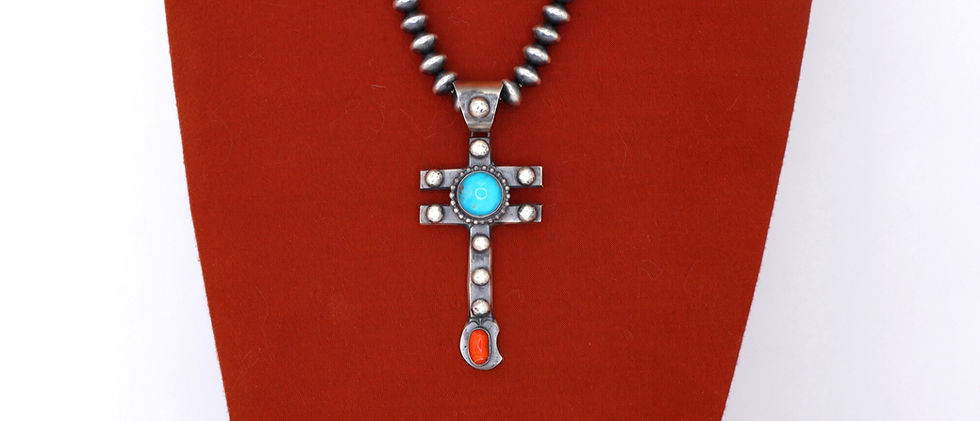
The work of Ella Linkin is known for its careful detail and bold, defined aesthetic. Her pieces often feature:
Strong, clean lines that create a distinctive visual structure
Handcrafted sterling silver construction
Traditional Navajo design influence with a personal, modern edge
Her ability to balance precision with artistry gives her jewelry a look that is both timeless and immediately recognizable.

A Distinctive Artistic Voice
What sets Ella Linkin apart is her attention to detail and the strength of her design work. The clean lines present throughout her pieces create a sense of movement and structure, allowing each design to stand out while remaining deeply rooted in Navajo silversmithing tradition.
Continuing the Tradition
Through her work, Ella Linkin carries forward the legacy of Navajo jewelry-making—honoring the teachings of her father while contributing her own voice to the art form.
Each piece represents not only skilled craftsmanship but also a continuation of generational knowledge, making her jewelry meaningful to collectors who value authenticity and heritage.