
The Art and Legacy of Navajo Silversmith Bob Becenti

In the world of Native American jewelry, certain artists leave behind more than objects—they leave a voice. Navajo artist Bob Becenti, also known as Robert Becenti (1949–2001), was one of those rare creators whose work bridged fine art and traditional silversmithing, carrying the spirit of the Southwest into every piece he made.
Born in the Rehoboth, New Mexico area of the Navajo Nation, Becenti came from a family rooted in artistic tradition. His mother, Bessie Becenti, was a respected weaver, and that early exposure to Navajo craftsmanship shaped his creative path.

A Multidisciplinary Artist
Before fully dedicating himself to jewelry, Becenti was known as a painter working in a realist style influenced by noted Navajo artist Jimmy Abeita. His paintings gained recognition throughout the 1970s and early 1980s, earning multiple awards at the prestigious Gallup Inter-Tribal Ceremonial.
This foundation in fine art is important—it directly informed his approach to silversmithing. Where some jewelers focus purely on form, Becenti approached silver as a storytelling medium.
Silversmithing as Expression
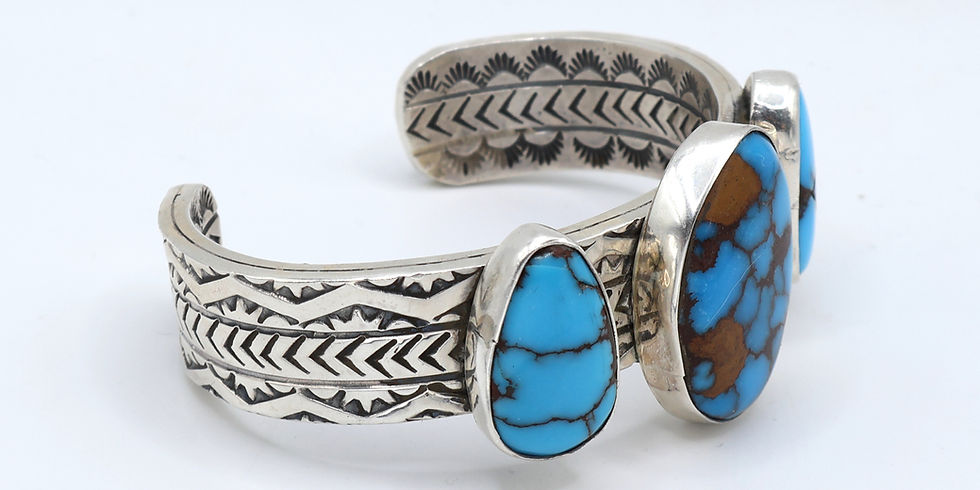
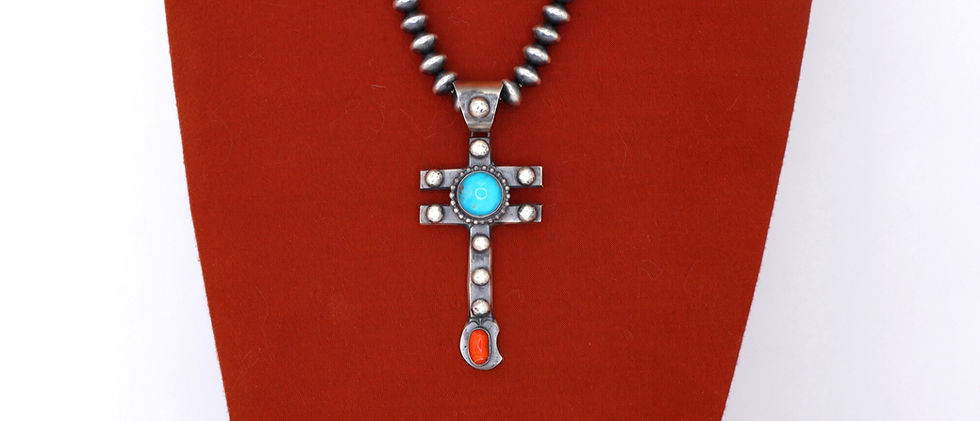
Alongside his painting career, Becenti was also an accomplished Navajo silversmith. He created handmade jewelry using sterling silver and natural stones, often turquoise, a material deeply tied to Navajo culture and identity.
His work reflects the broader traditions of Navajo silversmithing—an art form that has been central to Navajo culture since the late 19th century, combining hand-forged silver with symbolic design and natural materials.
What set Becenti apart was his ability to translate artistic vision into metal. His pieces often carried a sense of dimension and narrative, echoing the same themes found in his paintings—Southwestern life, cultural identity, and the natural world.
A Connection to Place and Community
Becenti’s career was closely tied to the art community of Gallup, New Mexico. He worked with the well-known Kiva Gallery, led by Nell Guadagnoli, who played a key role in supporting Native artists and bringing their work to a wider audience.
This relationship highlights an important truth about Native jewelry: it is not created in isolation. It is part of a living network of artists, traders, galleries, and collectors who help preserve and elevate the work.
Legacy and Collectibility
Bob Becenti passed away in 2001 at the age of 52, leaving behind a body of work that continues to be collected and appreciated today.
Because of his dual identity as both painter and silversmith, his jewelry carries added depth. Each piece is not just adornment—it is an extension of an artist who moved fluidly between canvas and silver, tradition and individuality.
For collectors and admirers of Native American jewelry, Becenti’s work represents authenticity: handmade, culturally grounded, and artist-driven. In a world of mass production, that kind of work stands apart.
Why His Work Still Matters
At Santa Fe Sun Handmade, we believe jewelry should tell a story—and Bob Becenti’s work embodies that philosophy. His pieces remind us that true craftsmanship is not just about technique, but about perspective, heritage, and intention.
When you hold a piece by Becenti, you’re not just holding silver and stone. You’re holding a moment in the continuum of Navajo artistry—one artist’s voice, preserved in metal.