
Rose Singer: Embodying a Navajo Silversmithing Legacy

Updated: Sep 30
Some names in Native American jewelry become associated with more than a single artist. They come to represent a family, a recognizable style, and a body of work carried forward from one generation—or one pair of hands—to another.
Rose Singer is one of those names.
A Navajo silversmith and jewelry artist, Rose Singer is closely connected to one of the most recognizable names in contemporary Navajo jewelry: her late husband, Tommy Singer. But Rose's story is not simply a footnote to his. Through her own work, she has helped preserve and continue a distinctive silversmithing tradition that collectors have recognized for decades.

The Singer Legacy
Tommy Singer became one of the best-known Navajo silversmiths of the twentieth century. Raised on the Navajo Reservation, he learned silversmithing from his father as a child and went on to develop a style that became instantly recognizable.
He is particularly associated with chip inlay, using small pieces of turquoise, coral, and other materials to create colorful designs within silver. He also became widely known for his intricate overlay work, combining layers of silver to produce bold geometric imagery with deeply oxidized backgrounds.
His designs frequently drew upon patterns and imagery connected to Navajo life and tradition.
Rose shared both Tommy's life and the world of jewelry making surrounding the Singer family. Together, their names can be found on jewelry bearing the T&R Singer hallmark.
Continuing the Work
After Tommy Singer's death in 2014, Rose continued making jewelry incorporating designs he had created during his lifetime.
That continuation is an important distinction.
Rather than allowing a recognizable body of work to disappear with the artist who originated it, Rose became a caretaker as well as a maker—continuing the Singer aesthetic while keeping the work connected to the family that created it.
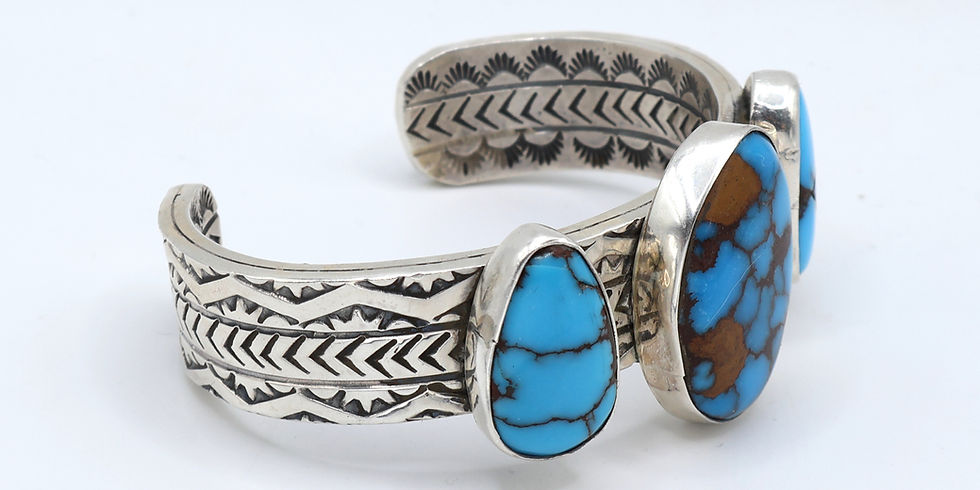
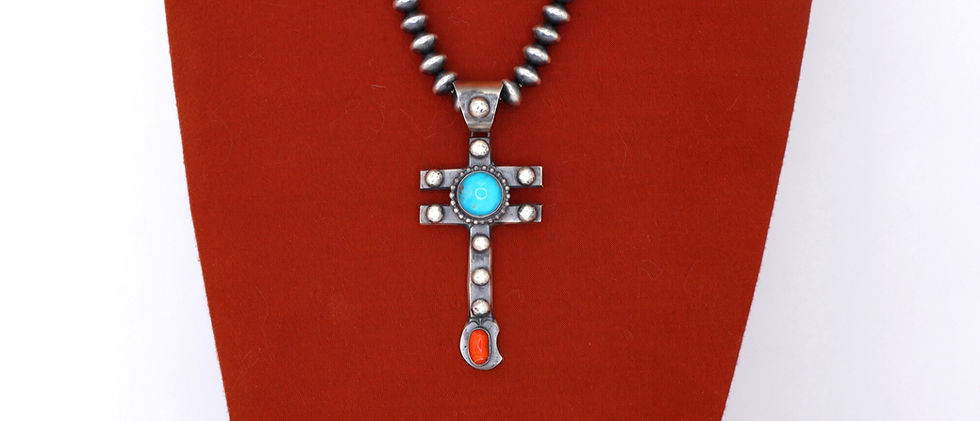
Pieces associated with Rose and the T&R Singer hallmark can include sterling silver overlay jewelry, gold-filled accents, hand-stamped designs, beads, necklaces, earrings, bracelets, pendants, and other forms.
Many retain the qualities that made Singer jewelry so recognizable: strong geometric patterns, oxidized recesses contrasting against polished silver, and designs that feel distinctly Southwestern without depending upon elaborate stone settings.

More Than Silver and Stone
Rose Singer's jewelry also illustrates something particularly meaningful about Native American silversmithing: artistic traditions do not necessarily end with one person.
Knowledge, designs, techniques, and ways of working can live within families.
In the Singer family, jewelry making has become part of a much larger artistic legacy. Tommy worked among family and other Navajo artists, and the Singer name continues to appear across several generations and branches of the family.
Rose's place within that story is especially compelling because her work represents both continuity and remembrance.
She did not simply preserve Tommy's jewelry as something belonging to the past. She continued making jewelry.
There is a tremendous difference between the two.
Recognizing Rose Singer's Work
Collectors may encounter several Singer hallmarks, so attribution matters.
Jewelry produced in connection with Rose and Tommy Singer is commonly found marked T&R Singer, while Tommy Singer's earlier work may carry variations of his own hallmark. Rose's work is also found attributed under her own name.
As with any collectible Native American jewelry, a hallmark should be considered alongside the construction, design, materials, provenance, and the history of the individual piece rather than used as the sole indication of authorship.
This becomes especially important with highly recognizable artists. Successful designs are inevitably imitated, and Singer-style overlay work has become familiar throughout the Southwest jewelry market.
A Legacy Still Being Written
It would be easy to describe Rose Singer only as "the wife of Tommy Singer."
It would also be incomplete.
Rose Singer is a Navajo jewelry artist who became part of an extraordinary silversmithing legacy and, following the loss of her husband, helped ensure that legacy remained alive at the workbench.
There is something especially beautiful about that.
Jewelry is often described as something that lasts. Sterling silver can survive generations. Turquoise can pass from one collector to another. A well-made piece may be worn long after the person who created it is gone.
But Rose Singer's story reminds us that craftsmanship itself can be passed forward, too.
And perhaps that is one of the most meaningful legacies an artist can leave behind.