
A Santa Fe Tale: Where Cultures Met, Stories Traveled, and Art Found a Home

Updated: Oct 5
Long before Santa Fe became a destination for art collectors, turquoise lovers, and travelers from around the world, it was already one of North America's great crossroads.
Every handmade piece that finds its way into our E-Gallery carries a story, but many of those stories passed through Santa Fe long before they reached us. To understand the jewelry, you first have to understand the city.
Santa Fe wasn't built around a single culture.
It became extraordinary because so many cultures met there.

Before There Was a Santa Fe
For thousands of years, the high desert of northern New Mexico was home to Indigenous peoples who developed sophisticated communities, trade routes, farming practices, and artistic traditions.
Ancestral Pueblo peoples built remarkable villages throughout the Southwest, while later Pueblo communities continued to thrive along the Rio Grande. Long before Europeans ever arrived, turquoise, shell, obsidian, pottery, woven textiles, and food moved between tribes through extensive trading networks stretching hundreds of miles.
Turquoise from the Southwest has been discovered in archaeological sites as far away as central Mexico, evidence that trade connected distant peoples centuries before modern roads existed.
Trade wasn't simply about commerce.
It was about relationships.
Ideas, techniques, beliefs, and artistic inspiration traveled alongside the goods themselves.
The Spanish Arrive
In 1610, Spanish governor Pedro de Peralta established what would become Santa Fe, making it the oldest continuously occupied state capital in the United States.
The city became the northern outpost of New Spain, linking Mexico with the peoples of the Southwest.
Spanish settlers introduced horses, sheep, blacksmithing traditions, new agricultural practices, Catholic missions, and European metalworking techniques. Indigenous communities contributed generations of knowledge about the land, local materials, pottery, weaving, and craftsmanship.
The result wasn't one culture replacing another.
It was a complicated, often difficult, blending of traditions that would continue for centuries.
The Pueblo Revolt
No history of Santa Fe would be complete without acknowledging the Pueblo Revolt of 1680.
Led by the Pueblo leader Popé, Pueblo communities united to drive Spanish settlers from New Mexico after decades of oppression and religious persecution.
For twelve years, Indigenous peoples reclaimed Santa Fe before the Spanish returned in 1692.
The events changed the region forever.
Although conflict remained, future relationships required greater accommodation between cultures than had existed before. The city that emerged continued to reflect both Indigenous resilience and Spanish influence.
The Santa Fe Trail Changes Everything
In 1821, Mexico gained independence from Spain.
That same year, the Santa Fe Trail officially opened trade between Missouri and Santa Fe.
Almost overnight, wagons began arriving carrying cloth, manufactured goods, tools, glassware, books, and supplies from the eastern United States. They returned loaded with silver, wool, furs, mules, handcrafted goods, and stories of the Southwest.
Merchants from Mexico...
American traders...
Pueblo artisans...
Navajo silversmiths...
Spanish descendants...
Mountain men...
Army officers...
Travelers from nearly every background crossed paths in Santa Fe's bustling plaza.
The city became one of the most fascinating cultural melting pots in North America.
The Arrival of Silver Jewelry
Interestingly, traditional Navajo silversmithing is relatively young compared to many Indigenous art forms. Most historians believe the Navajo learned silversmithing during the mid-1800s, adapting techniques learned from Mexican smiths while developing an artistic style entirely their own. Early pieces often featured silver alone.
As turquoise became more widely incorporated during the late nineteenth century, an unmistakable Southwestern style began to emerge.
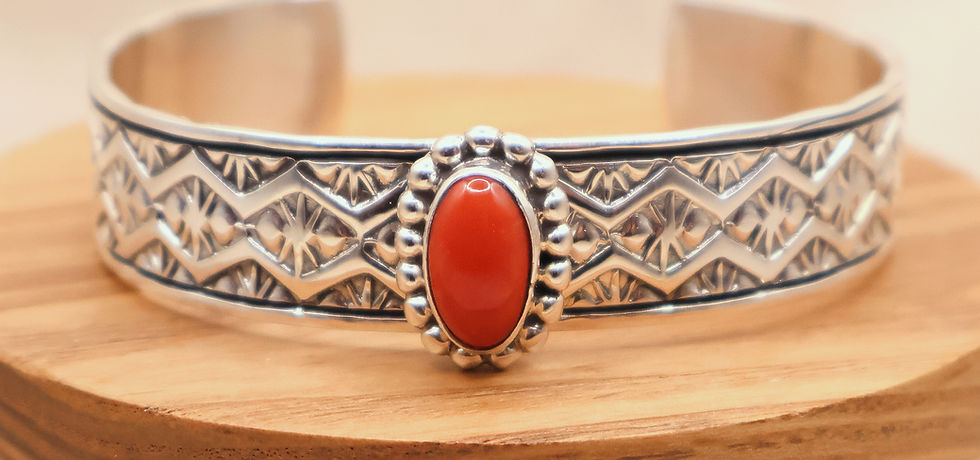
Today, many of the designs we recognize—cluster work, squash blossoms, conchos, stamp work, repoussé, hand-cut stones, and heavy sterling silver—represent generations of innovation passed from master silversmiths to younger artists.
Santa Fe became one of the places where these remarkable works were bought, sold, admired, and eventually collected.
Artists Still Gather Here
Walk through Santa Fe today and you'll hear many languages.
You'll meet artists from nearby pueblos, Navajo silversmiths, Hispanic craftspeople, painters, sculptors, jewelers, photographers, collectors, and visitors from every corner of the world.
The city still does what it has done for centuries. It brings people together. Markets fill with handmade work. Conversations begin between strangers. Traditions continue while new ideas quietly take root.
The materials may be silver and turquoise...But the true treasure has always been the exchange of culture.
More Than a Place on a Map
When we travel through New Mexico meeting artists and selecting pieces for Santa Fe Sun Handmade, we're reminded that Santa Fe is much more than a beautiful destination.
It represents centuries of craftsmanship, resilience, trade, and human connection.
Every handmade piece reflects not only the artist who created it, but also generations of shared knowledge passed through families, neighbors, teachers, trading posts, and communities.
Perhaps that's why authentic handmade Southwestern jewelry feels different.
You're not simply wearing silver.
You're wearing a small chapter of a story that has been unfolding for hundreds of years.
And like every great Santa Fe tale...
The story is still being written.